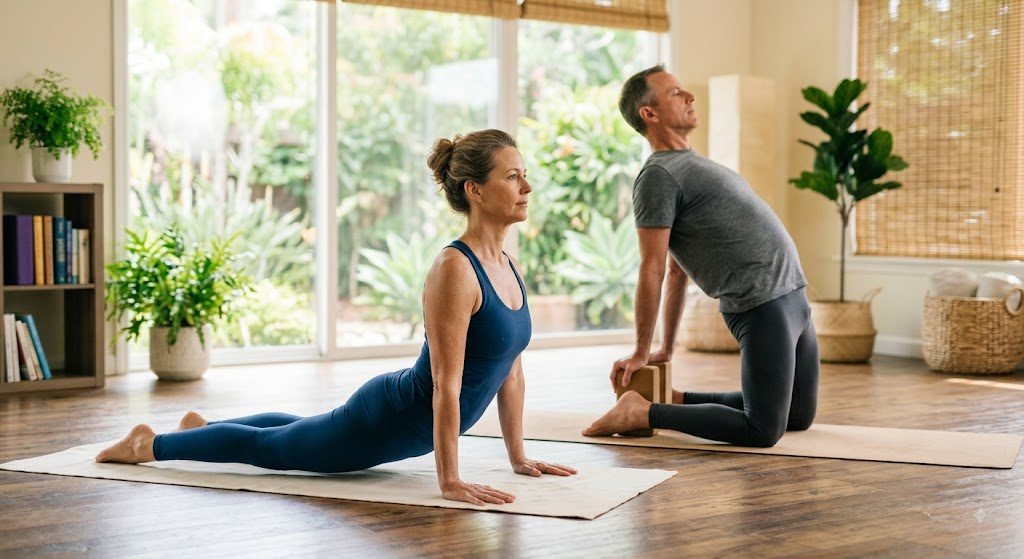
Back pain and poor posture have become increasingly common among students, office professionals, homemakers and senior citizens. Long hours of sitting, limited physical movement, unsuitable workstation arrangements, muscle weakness and stress can all contribute to stiffness and discomfort.
A well-planned yoga routine may help improve flexibility, body awareness, balance and the strength of muscles that support the spine. At Durlav Yoga Centre in Guwahati, guided yoga sessions can help individuals practise movements safely and build a healthier, more active lifestyle.
Yoga is not a guaranteed cure for back pain or a replacement for medical treatment. However, when recommended by a healthcare professional and practised under appropriate guidance, it may form part of a broader approach to managing certain types of back discomfort.
Why Back Pain and Poor Posture Are So Common
Modern lifestyles often keep the body in one position for extended periods. Working at a computer, using a mobile phone, driving and studying can encourage rounded shoulders, forward-head positioning and stiffness around the hips and upper back.
Common factors associated with back discomfort include:
- Prolonged sitting or standing
- Limited physical activity
- Weak core and back-supporting muscles
- Reduced hip and hamstring flexibility
- Repetitive movements
- Unsuitable lifting techniques
- Poor workstation setup
- Stress-related muscular tension
- Sudden increases in physical activity
- Previous injuries or underlying health conditions
The World Health Organization identifies low back pain as a major global health concern and emphasises rehabilitation, education, self-care and a gradual return to meaningful activities.
Can Yoga Help with Back Pain?
Research suggests that yoga may provide small improvements in pain and back-related function for some people with chronic, non-specific low back pain.
A research summary from the National Center for Complementary and Integrative Health reports that yoga may improve pain and function, although its effects can be similar to those of other forms of exercise. Results vary depending on the individual, the cause of the pain, the style of yoga and how safely the movements are performed.
The World Health Organization’s guidance for chronic primary low back pain includes exercise programmes among the non-surgical interventions that may be considered as part of personalised care. The WHO recommends a holistic approach rather than relying on a single treatment. Read the complete WHO guideline for chronic low back pain.
Yoga may support back health by encouraging:
- Gentle mobility of the spine and surrounding joints
- Improved flexibility in tight muscles
- Greater awareness of posture and movement
- Gradual strengthening of supporting muscles
- Controlled breathing and relaxation
- Better balance and coordination
- Increased confidence in everyday movement
The benefits are more likely to develop through regular, appropriate practice than through occasional or forceful stretching.
How Yoga May Support Better Posture
Posture is not about maintaining one rigid “perfect” position throughout the day. Healthy posture involves the ability to move comfortably, change positions and support the body during different activities.
Yoga can improve body awareness by helping practitioners notice how they sit, stand, walk and distribute their weight. This awareness may make it easier to identify habits such as slouching, lifting the shoulders or placing excessive strain on the lower back.
Strengthening Postural Muscles
Many yoga movements engage the abdomen, back, hips, shoulders and legs. These muscles work together to support the spine during sitting, standing and movement.
Rather than focusing only on the painful area, a balanced yoga programme can gradually strengthen the entire movement system. Stronger supporting muscles may help the body manage everyday physical demands more efficiently.
Improving Flexibility and Mobility
Stiffness around the hips, shoulders, chest and legs can influence how the body moves. Gentle yoga stretches may improve mobility and make daily activities feel more comfortable.
Flexibility should be developed gradually. Forcing the body into a deep stretch can increase discomfort or cause injury, particularly for beginners and people with existing back problems.
Developing Body Awareness
Yoga encourages attention to alignment, breathing and physical sensations. With guidance, practitioners can learn to recognise unnecessary tension and adjust their position before discomfort increases.
This improved body awareness can also be useful outside the yoga class, including while working at a desk, driving, lifting objects or using a mobile phone.
Encouraging Regular Movement
Remaining in the same position for too long can contribute to stiffness. Yoga promotes varied movement and may encourage people to become more physically active.
The UK’s National Health Service guidance on back pain notes that activities such as walking, swimming, yoga and Pilates may help ease back pain for some individuals.
Gentle Yoga Practices Commonly Used for Back Health
The suitability of any yoga posture depends on the individual’s symptoms, mobility, medical history and experience. A qualified instructor should modify the practice where necessary.
Common gentle practices may include:
Mountain Pose
Mountain Pose encourages awareness of standing alignment, weight distribution and breathing. It may help practitioners understand how the feet, legs, pelvis, shoulders and head work together during standing.
Cat–Cow Movement
This gentle sequence takes the spine through controlled flexion and extension. It may help reduce stiffness and improve awareness of spinal movement when performed comfortably.
Child’s Pose
Child’s Pose can provide a gentle stretch through the back, hips and shoulders. It may need to be modified for people with knee, hip or spinal conditions.
Sphinx Pose
Sphinx Pose introduces a mild backward-bending position while the body remains supported by the forearms. Some people find extension-based movements comfortable, while others may experience increased symptoms. Individual assessment is therefore important.
Bridge Pose
A carefully performed Bridge Pose can engage the gluteal muscles, legs and trunk. These areas contribute to pelvic and spinal support during everyday movements.
Supine Knee-to-Chest Movement
Bringing one knee gently towards the chest while lying down may provide a comfortable stretch around the lower back and hips for some people. It should not be forced.
Supported Relaxation
Restorative positions and controlled breathing may help reduce general muscular tension and create a sense of relaxation. Props can be used to support the knees, neck or lower back.
These examples are for general information and are not a personalised exercise prescription.
Why Guided Yoga Is Important for Back Pain
Following random online videos may not be appropriate for someone experiencing recurring pain. A movement that benefits one person can aggravate another person’s symptoms.
During an instructor-guided session, the practice can be adapted according to:
- Age and general fitness
- Current flexibility and strength
- Location and severity of discomfort
- Previous injuries
- Medical conditions
- Pregnancy
- Joint limitations
- Experience with yoga
- Advice from a doctor or physiotherapist
Guidance is especially valuable for beginners who may not yet recognise when they are overstretching, holding their breath or placing excessive pressure on a sensitive area.
At Durlav Yoga Centre, participants can focus on gradual progress, proper breathing and controlled movement instead of attempting difficult postures too quickly.
Yoga for Office Workers and People with Sedentary Lifestyles
Professionals who spend long hours at a desk often experience stiffness around the neck, shoulders, hips and lower back. Yoga may help counter prolonged inactivity by introducing regular mobility, stretching and strengthening exercises.
In addition to yoga, helpful daily habits can include:
- Changing sitting positions regularly
- Taking brief movement breaks
- Keeping the computer screen near eye level
- Supporting the feet comfortably
- Avoiding prolonged mobile-phone use with the head bent forward
- Using safe techniques when lifting objects
- Walking regularly
- Adjusting the chair and desk to suit the body
Yoga works best as part of an active lifestyle. One class cannot fully compensate for remaining inactive during the rest of the week.
The Role of Breathing and Relaxation
Stress can contribute to muscle tension and may influence how pain is experienced. Slow, controlled breathing can help create a calmer practice and reduce unnecessary physical effort.
Yoga sessions commonly combine movement with mindful breathing and relaxation. This mind–body approach may help participants feel more confident and comfortable while moving.
However, relaxation alone does not address every cause of back pain. Persistent or worsening symptoms require professional medical assessment.
Who Should Consult a Doctor Before Practising Yoga?
Speak with a doctor, physiotherapist or another qualified healthcare professional before beginning yoga if you:
- Recently experienced a fall or injury
- Have severe or unexplained back pain
- Have undergone spinal or joint surgery
- Have osteoporosis or a diagnosed spinal condition
- Experience pain travelling down the leg
- Have numbness, tingling or weakness
- Are pregnant or recently gave birth
- Have significant balance difficulties
- Have a serious heart or respiratory condition
- Are receiving treatment for another medical condition
Seek urgent medical attention if back pain is accompanied by loss of bladder or bowel control, numbness around the groin or buttocks, weakness in both legs, chest pain, fever, unexplained weight loss or pain following a serious accident. Do not attempt to manage these symptoms through yoga alone.
Why Choose Durlav Yoga Centre in Guwahati?
Durlav Yoga Centre offers guided yoga sessions for individuals who want to improve flexibility, posture, strength, balance and overall well-being. Classes can help beginners understand foundational movements and practise at a pace appropriate for their current abilities.
People searching for yoga classes for back pain in Guwahati may benefit from an environment where posture, breathing and movement are supervised. The aim should be sustainable progress—not forcing the body into advanced poses.
Potential benefits of guided practice include:
- Clear instructions for beginners
- Adjustments based on individual ability
- Focus on controlled and comfortable movement
- Support for developing a regular routine
- Attention to breathing and relaxation
- Gradual improvement in strength and flexibility
- A supportive setting for long-term wellness
Students should inform the instructor about pain, injuries, medical conditions and professional advice before beginning a session.
Build a Healthier Relationship with Movement
Better posture and back comfort usually develop through consistent habits. Regular movement, suitable exercise, sufficient rest, workplace adjustments and professional care when necessary all play important roles.
Yoga can be a valuable part of this process. It encourages gentle movement, physical awareness and gradual strengthening while helping practitioners develop a more mindful relationship with their bodies.
If you are looking for expert-guided yoga in Guwahati, consider visiting Durlav Yoga Centre. Begin with an appropriate class, communicate openly about your physical condition and allow your body time to adapt.
Through regular and carefully guided practice, yoga may help you move with greater comfort, develop better postural awareness and support your overall physical and mental well-being.
Frequently Asked Questions
Is yoga good for lower back pain?
Yoga may help some people with chronic, non-specific lower back pain by improving movement and back-related function. It is not suitable for every condition, so persistent or severe pain should be assessed by a healthcare professional.
How often should I practise yoga for posture?
Consistency is generally more useful than occasional intensive sessions. The appropriate frequency depends on your health, experience and instructor’s guidance. Beginners should start gradually and allow time for recovery.
Can beginners join yoga classes for back pain?
Beginners can practise gentle yoga, but they should inform the instructor about existing symptoms. Movements may need to be simplified, supported or avoided depending on the cause of the pain.
Can yoga permanently cure back pain?
Yoga cannot guarantee a permanent cure. Back pain has many possible causes, and effective management may require exercise, education, physiotherapy, medical care, workplace changes or other treatments.
Where can I find guided yoga classes in Guwahati?
Durlav Yoga Centre provides guided yoga sessions in Guwahati for people interested in posture, flexibility, relaxation and overall wellness. Contact the centre directly to confirm class schedules, suitability and availability.