Modern lifestyles often involve long hours of sitting, limited physical activity, screen time and everyday stress. Over time, these habits can affect mobility, flexibility, posture and overall well-being. A consistent yoga practice offers a holistic way to bring movement, breathing and mindfulness into daily life.
For people searching for the best yoga centre in Guwahati, learning yoga under proper guidance can make a significant difference. At Durlav Yoga Centre Guwahati, practitioners can explore yoga asanas with attention to technique, breathing, balance and gradual progression.
Yoga is not simply about becoming flexible. The World Health Organization highlights that yoga combines movement, breathing and mindfulness and can support strength, flexibility, balance and mobility.
Here are 10 essential yoga asanas that can form part of a well-rounded yoga practice.
1. Tadasana – Mountain Pose
Tadasana, or Mountain Pose, may appear simple, but it is an important foundational yoga posture.
The pose encourages practitioners to become more aware of body alignment while standing. It can help establish the basic principles of posture, stability and controlled breathing that are useful when progressing to other standing asanas.
Why Practice Tadasana?
Regular practice can help develop:
- Postural awareness
- Standing balance
- Body awareness
- Stability
- Mindful breathing
Tadasana can be especially useful for beginners learning how to align and control their bodies before moving into more complex postures.
2. Vrikshasana – Tree Pose
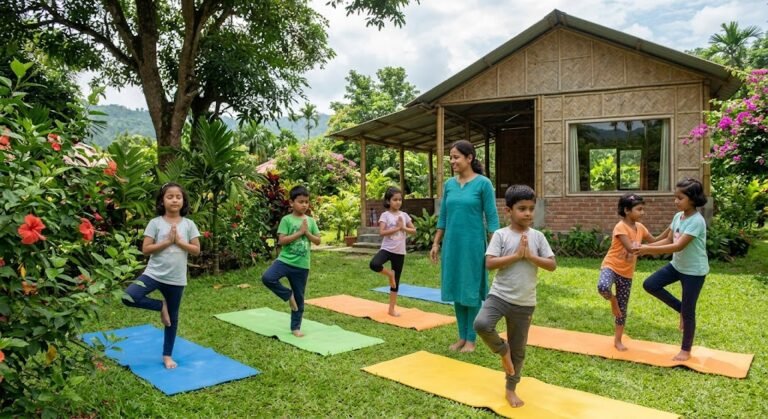
Vrikshasana, commonly known as Tree Pose, is one of yoga’s best-known balancing postures.
The practitioner balances primarily on one leg while maintaining an upright posture. This requires concentration, stability and controlled movement.
Benefits of Vrikshasana
Practising Tree Pose may help improve:
- Balance and stability
- Concentration
- Coordination
- Postural control
- Lower-body awareness
Balance is an important part of physical fitness, and yoga provides several ways to develop it progressively.
3. Trikonasana – Triangle Pose
Trikonasana, or Triangle Pose, combines stretching with controlled standing alignment.
During the posture, the body moves through a lateral stretch while the legs provide a stable foundation. When performed correctly and within an individual’s comfortable range, it can contribute to a broader flexibility-focused yoga routine.
Why Include Trikonasana?
It can support:
- Flexibility
- Body awareness
- Lateral movement
- Balance
- Controlled stretching
Beginners should avoid forcing the body deeper into the pose simply to achieve a particular visual position. Comfort and alignment are more important than how far you can stretch.
4. Virabhadrasana – Warrior Pose
Virabhadrasana, or Warrior Pose, is widely practised in modern yoga routines focusing on strength, stability and concentration.
Holding a Warrior variation requires the legs and core to maintain a stable position while the upper body remains controlled.
Why Practice Warrior Pose?
It can be incorporated into routines designed to develop:
- Lower-body strength
- Stability
- Balance
- Body control
- Endurance
- Concentration
Warrior poses are excellent examples of how yoga can combine strength and flexibility rather than treating them as completely separate goals.
5. Bhujangasana – Cobra Pose
Bhujangasana, commonly called Cobra Pose, involves a controlled backward movement of the upper body while lying on the abdomen.
It is included in the Government of India’s Common Yoga Protocol and is a familiar part of many traditional and contemporary yoga routines.
Focus of Bhujangasana
When practised appropriately, Cobra Pose involves:
- Controlled spinal movement
- Upper-body opening
- Postural awareness
- Coordinated breathing
- Mindful movement
People with existing back problems, injuries or other health concerns should seek appropriate professional guidance before attempting postures that significantly involve the spine.
6. Paschimottanasana – Seated Forward Bend
Paschimottanasana is a seated forward-bending yoga posture.
Instead of trying to reach the toes at any cost, practitioners should focus on controlled movement and their individual range of motion.
Why Practice Paschimottanasana?
The posture can form part of a yoga routine focused on:
- Flexibility
- Mindful stretching
- Body awareness
- Controlled breathing
- Relaxation
One of the most important principles for beginners is understanding that flexibility develops progressively. Yoga should not become a competition to see who can stretch the farthest.
7. Setu Bandhasana – Bridge Pose
Setu Bandhasana, or Bridge Pose, is another useful posture for a balanced yoga routine.
The pose involves lifting the hips from a lying position while maintaining controlled alignment.
Bridge Pose Can Focus On:
- Strength
- Stability
- Body control
- Mobility
- Coordination between movement and breathing
Correct positioning is important, particularly around the neck, shoulders and spine. Beginners can benefit from learning the technique under qualified supervision.
8. Adho Mukha Svanasana – Downward-Facing Dog
Adho Mukha Svanasana, popularly called Downward-Facing Dog, is one of the most recognizable yoga postures worldwide.
It combines multiple elements of physical practice and is commonly incorporated into flowing yoga sequences.
Why Practice Downward-Facing Dog?
The posture can contribute to routines targeting:
- Flexibility
- Upper- and lower-body engagement
- Body awareness
- Stability
- Coordination
Beginners may initially find the posture challenging. Proper instruction can help them understand positioning without unnecessarily forcing the heels, shoulders or spine.
9. Balasana – Child’s Pose
Not every yoga posture needs to be physically demanding.
Balasana, or Child’s Pose, is commonly incorporated between more active movements or during quieter portions of a yoga session.
Why Is Balasana Useful?
It can encourage:
- Relaxation
- Mindful breathing
- A slower pace
- Body awareness
- Transition between postures
Including gentler positions alongside strengthening and balancing poses helps create a more rounded yoga practice.
10. Shavasana – Corpse Pose
Shavasana is traditionally practised as a relaxation posture, often near the end of a yoga session.
Although the practitioner appears to be simply lying down, the intention is to relax consciously while maintaining awareness.
Importance of Shavasana
Shavasana provides an opportunity to focus on:
- Relaxation
- Breathing
- Body awareness
- Mental calmness
- Mindfulness
This demonstrates an important aspect of yoga: physical movement is only one part of the practice.
Yoga Is More Than Just Asanas
People sometimes associate yoga entirely with physical postures. Traditional yoga, however, encompasses a much broader system.
The Ministry of Ayush Common Yoga Protocol describes yoga practices that include asanas, pranayama, meditation and other yogic disciplines.
Pranayama develops awareness and regulation of breathing, while meditation focuses attention and awareness.
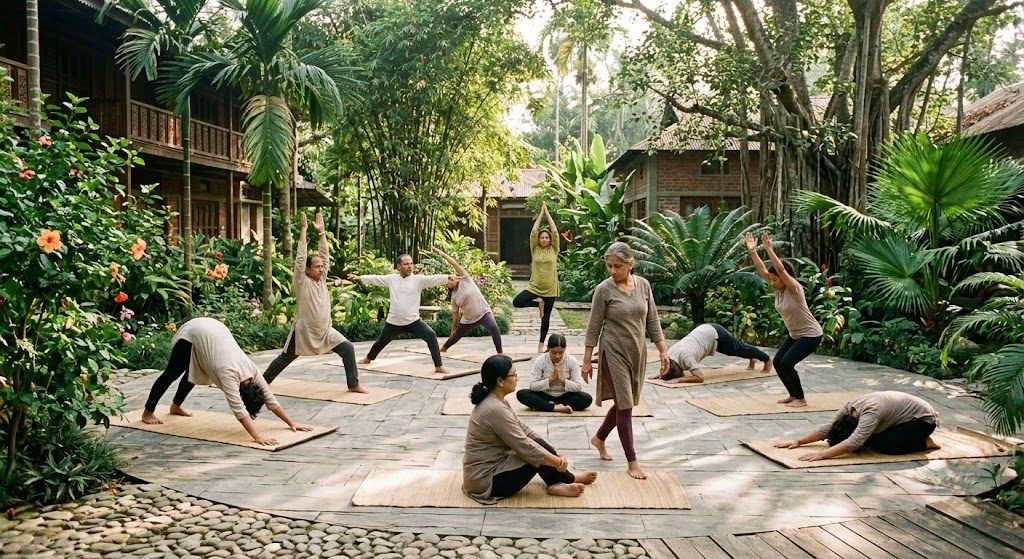
A balanced yoga routine may therefore combine:
Asana + Pranayama + Meditation + Relaxation + Mindfulness
This holistic approach is one reason yoga continues to attract practitioners with different fitness levels, ages and wellness goals.
Why Strength, Flexibility and Balance Matter
Strength, flexibility and balance work together in everyday movement.
Strength helps the body perform physical activities. Flexibility supports comfortable movement through an appropriate range of motion. Balance and coordination help maintain stability during movement and everyday activities.
WHO’s 2026 International Day of Yoga guidance particularly highlights balance, flexibility, strength and mobility as abilities that support active and independent living.
Scientific research reviewed by health authorities also suggests that yoga can have positive effects on physical fitness and balance when practised appropriately and consistently.
Why Proper Yoga Technique Matters
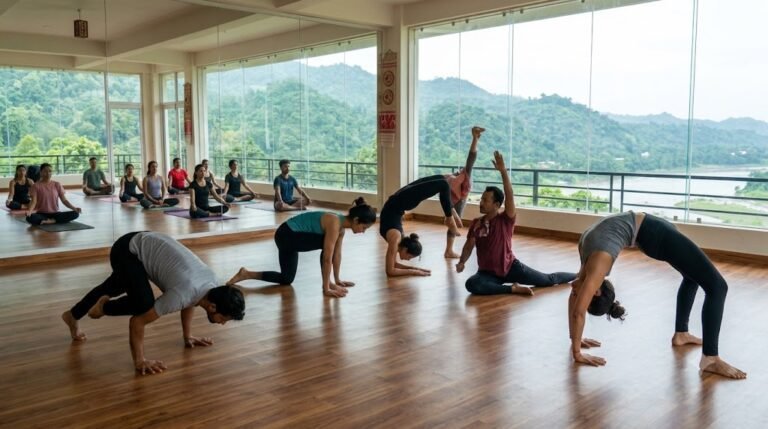
Watching a yoga video and practising under direct guidance can be very different experiences.
An instructor can observe alignment, explain breathing patterns, recommend suitable modifications and help practitioners progress gradually.
This is particularly important because everyone has a different level of:
- Flexibility
- Strength
- Mobility
- Balance
- Previous exercise experience
A beginner should not be expected to perform the same variation of an asana as an experienced practitioner.
The goal should be safe, consistent and progressive practice, rather than forcing the body into difficult positions.
Learn Yoga at Durlav Yoga Centre Guwahati
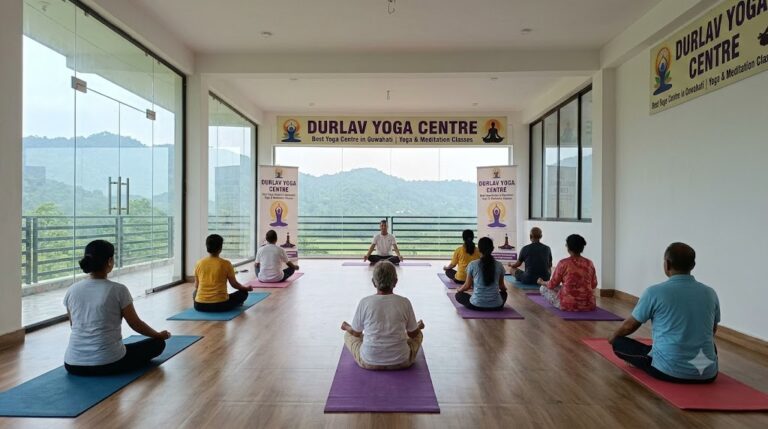
If you are searching for a yoga centre in Guwahati where you can develop a consistent yoga routine, Durlav Yoga Centre provides an option for guided practice in the city.
Students can focus on learning yoga with greater attention to posture, breathing, flexibility, strength, balance and mindfulness rather than simply copying poses.
Whether your goal is to become more active, improve flexibility, develop better balance or establish yoga as part of your daily wellness routine, consistency and appropriate guidance are important.
Yoga for Beginners in Guwahati
You do not need to be extremely flexible before starting yoga.
In fact, beginners can start with simple movements and gradually progress according to their individual capabilities.
A beginner-friendly approach should emphasize:
- Learning basic asanas first
- Understanding correct alignment
- Breathing naturally
- Avoiding forced stretches
- Progressing gradually
- Practising consistently
- Allowing adequate relaxation
WHO notes that yoga can be adapted for different ages and abilities. This adaptability is one of the reasons yoga can be accessible to such a broad range of people.
Yoga for Today’s Lifestyle
Long working hours, desk-based jobs and increasingly sedentary routines make regular physical activity particularly important.
Yoga offers an accessible way to incorporate movement into everyday life. It does not necessarily require expensive equipment, and practices can be adapted according to available time and individual ability.
WHO has also highlighted yoga as a way to increase physical activity while supporting physical and mental well-being.
For busy professionals, students, homemakers and older adults in Guwahati, developing a realistic and sustainable yoga routine can be more valuable than following an intensive routine for only a few days.
How Often Should You Practice Yoga?
Consistency matters more than trying to master many advanced postures immediately.
Beginners can start gradually and focus on correct technique. As strength, flexibility and confidence develop, the practice can progress appropriately.
The ideal frequency and intensity depend on age, fitness, health, goals and the type of yoga being practised.
Most importantly, listen to your body and avoid treating discomfort or pain as something that must be overcome.
Start Your Yoga Journey at Durlav Yoga Centre Guwahati
Tadasana, Vrikshasana, Trikonasana, Virabhadrasana, Bhujangasana, Paschimottanasana, Setu Bandhasana, Adho Mukha Svanasana, Balasana and Shavasana provide a varied introduction to strength, flexibility, balance, movement and relaxation.
But yoga is not about mastering ten poses.
It is about developing a sustainable relationship with movement, breathing and awareness.
If you are searching for the best yoga centre in Guwahati to learn yoga asanas with proper guidance, Durlav Yoga Centre is worth exploring for your yoga journey.
Start gradually, practise consistently and allow your strength, flexibility and balance to develop over time.
Frequently Asked Questions
Which is the best yoga centre in Guwahati for beginners?
Beginners looking for guided yoga practice in Guwahati can consider Durlav Yoga Centre. When selecting a yoga centre, consider instructor guidance, suitability for your experience level, class structure and emphasis on safe practice.
Which yoga asanas are good for strength and flexibility?
A balanced routine may include poses such as Tadasana, Trikonasana, Virabhadrasana, Bhujangasana, Paschimottanasana and Setu Bandhasana. The appropriate combination depends on individual fitness, mobility and experience.
Which yoga pose helps improve balance?
Vrikshasana or Tree Pose is a well-known balancing asana. Other standing yoga postures can also challenge stability and body awareness.
Can beginners practice yoga?
Yes. Yoga can be adapted for different ages and abilities. Beginners should start gradually, learn appropriate technique and avoid forcing themselves into advanced postures.
Is yoga only about flexibility?
No. Yoga can incorporate physical postures, breathing practices, meditation, relaxation and mindfulness. Current evidence also supports potential benefits related to balance, strength, flexibility and general well-being.
Where can I learn yoga in Guwahati?
People looking for yoga classes in Guwahati can explore Durlav Yoga Centre for guided yoga practice and training.