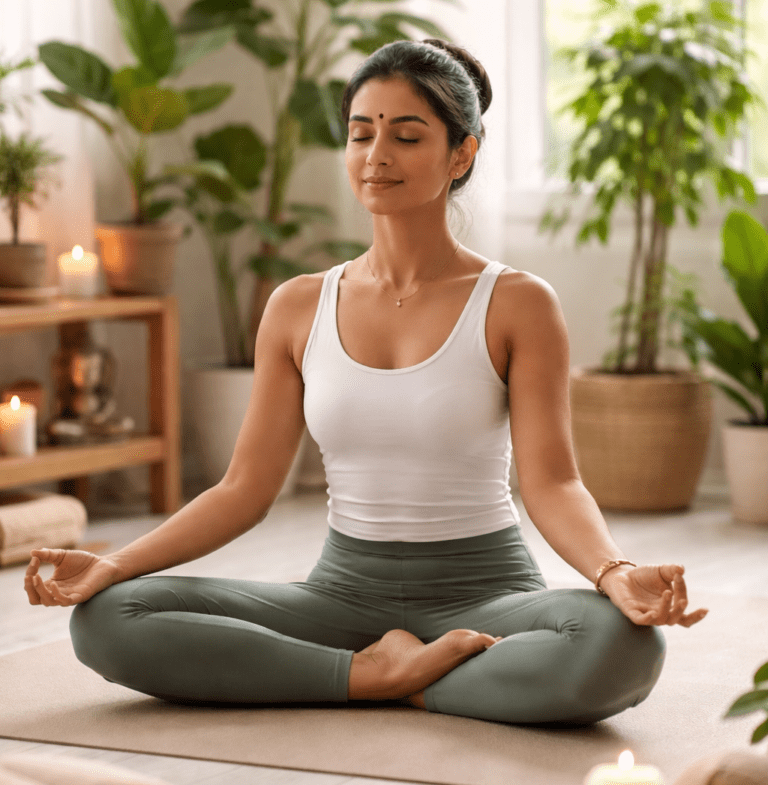

Beginning the day with a focused yoga practice is a time-tested way to improve physical fitness, mental clarity and emotional balance. In an urban environment like Guwahati where commuters, students and professionals face daily time pressures a short, consistent morning routine delivers outsized benefits for body and mind. This article presents a practical 20–30 minute routine, explains the evidence behind the core practices, and explains why joining a structured morning batch at a local centre such as Durlav Yoga Centre can make the habit sustainable.
Why morning yoga works?
Regular yoga practice combines physical postures (asanas), breathwork (pranayama) and mindful relaxation. Clinical and review literature demonstrates consistent benefits: improvements in flexibility and strength, reductions in perceived stress and anxiety, and measurable gains in cardiovascular and respiratory markers when practiced regularly. Major health institutions and recent systematic reviews highlight yoga’s role in stress reduction and general wellness.
A commonly practised morning sequence – Surya Namaskar (Sun Salutation)—functions as both a dynamic warm-up and a gentle cardiovascular stimulus. Research shows Surya Namaskar can improve pulmonary function and contribute to cardiovascular conditioning when practiced correctly and regularly.
20–30 Minute Morning Routine (Beginner → Intermediate)
This compact routine balances activation, mobility and calming practices. Perform it on an empty stomach or at least 45–60 minutes after a light snack.
1. Centering & Pranayama – 3 minutes
Sit comfortably (Sukhasana). Practice slow diaphragmatic breathing or Nadi Shodhana (alternate nostril) to stabilize the nervous system and prepare the mind.
2. Surya Namaskar – 6–8 rounds (8–10 minutes)
Flow through 6–8 rounds at a steady, mindful pace – focus on breath-synchronised movement. This warms the whole body, raises circulation and promotes spinal mobility. Modify range and speed for fitness level.
3. Standing Sequence – 5 minutes
Two to three rounds of:
-
Tadasana → Trikonasana (Triangle) → Virabhadrasana II (Warrior II)
These poses build lower-body strength, balance and postural alignment.
4. Seated/Floor Poses – 6 minutes
One or two rounds of:
-
Paschimottanasana (seated forward bend), Bhujangasana (cobra) or Ardha Matsyendrasana (seated twist) gentle holds to support digestion and spinal health.
5. Short Meditation / Savasana – 2–4 minutes
End with a quiet 2–4 minute Savasana or seated mindfulness to integrate the practice and set a calm tone for the day.
Practical tips for safe, effective practice
-
Consistency over intensity: Short daily sessions (4–6 times/week) produce better long-term results than sporadic long sessions.
-
Progress gradually: Increase rounds of Surya Namaskar or hold times slowly to avoid strain.
-
Mindful alignment: Use an instructor (in-person or online) for early feedback alignment reduces injury risk.
-
Combine with good sleep & nutrition: Yoga amplifies benefits when paired with healthy sleep and diet.
Benefits you can expect (what the evidence shows)
-
Reduced stress and improved mood: Multiple reviews and trials report meaningful reductions in stress, anxiety and self-reported mood symptoms after regular yoga practice.
-
Better flexibility and muscular endurance: Dynamic sequences like Surya Namaskar and targeted asanas increase mobility and functional strength.
-
Cardio-respiratory and metabolic support: Regular practice can positively influence heart rate, pulmonary function and markers associated with metabolic health.
Why join a Morning Yoga Batch at Durlav Yoga Centre (Guwahati)?
-
Structured, time-friendly batches: Morning slots help you establish routine before work or study.
-
Experienced instructors: Guidance on breath-work and alignment reduces injury risk and improves outcomes.
-
Local, community-driven classes: Practising with peers boosts accountability and motivation.
-
Multiple branches (Six Mile, Jalukbari): Convenient for residents across Guwahati. For schedules and trial classes, Durlav Yoga Centre publishes details on their site and social channels.
Sample weekly plan (fast start)
-
Mon–Sat: 20–30 minute morning routine (as above)
-
Sun: Restorative yoga or longer meditation (20–30 minutes)
-
Weekly target: 5–6 short sessions + 1 restorative session
Safety & contraindications
People with chronic medical conditions (cardiac issues, uncontrolled hypertension, recent surgery, pregnancy complications) should consult a physician before starting a new yoga program. Instructors should be informed about injuries or limitations so the practice can be adapted safely.
Conclusion
A short, consistent morning yoga routine is a practical and evidence-based way to improve physical fitness, reduce stress and set a positive tone for each day. For residents of Guwahati seeking structure and community, the Morning Yoga Batch at Durlav Yoga Centre provides an accessible, instructor-led path to build the habit safely and effectively.
Interested in joining? Contact Durlav Yoga Centre to book a trial or ask about morning batch timings and instructor profiles.
Sources
-
Johns Hopkins Medicine — 9 Benefits of Yoga. Johns Hopkins Medicine
-
Khajuria A., Systematic Review: Reducing Stress with Yoga (PMC). PMC
-
Stec K., et al., Effects of Suryanamaskar — International Journal of Environmental Research and Public Health (2023). MDPI
-
Bhavanani AB., Comparative study of slow and fast Surya Namaskar (PMC, 2011). PMC
-
Johns Hopkins — The Yoga-Heart Connection (Cardiovascular benefits). Johns Hopkins Medicine
-
Frontiers in Public Health — Yoga reduces physiological stress and improves well-being (2024). Frontiers
-
Durlav Yoga Centre — official site (class details, locations). durlavyogacentre.in
-
Durlav Yoga Centre — Instagram (contact & local batch info). Instagram