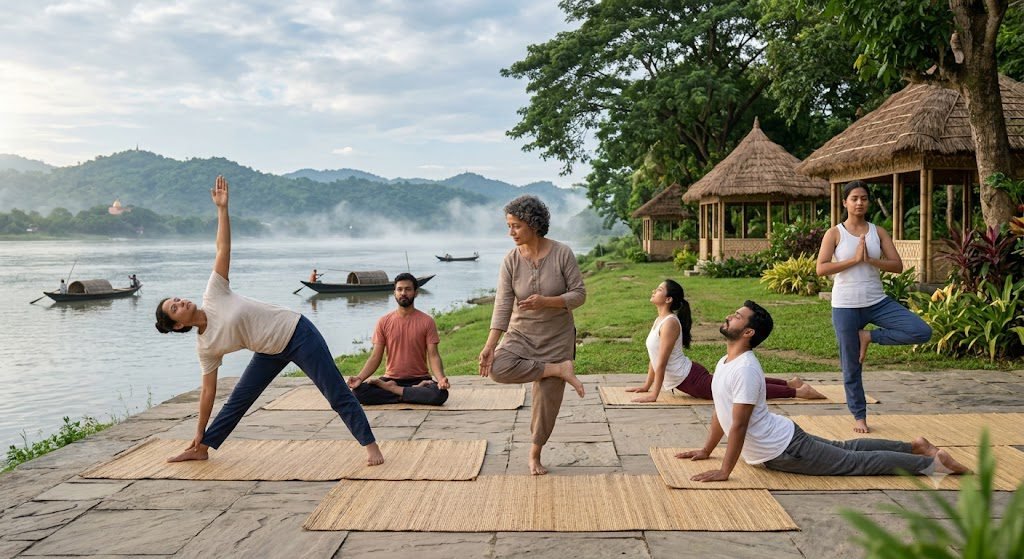
Modern lifestyles often involve long hours at desks, frequent smartphone use, limited movement and mental overload. Over time, these habits can contribute to stiffness, reduced mobility and difficulty maintaining concentration. A structured yoga practice offers a practical way to work on movement, balance, breathing and mental awareness together.
If you are looking for expert yoga training in Guwahati, Durlav Yoga Centre offers an opportunity to develop yoga skills through guided practice. Rather than treating yoga as only a workout, students can focus on important elements such as asanas, flexibility, body alignment, balance, pranayama, meditation and mindful movement.
Scientific research supports several potential benefits of yoga. The U.S. National Center for Complementary and Integrative Health (NCCIH) notes that yoga typically combines physical postures, breathing techniques and meditation, and research suggests benefits for areas including general wellness, stress management, balance and mental well-being.
Why Flexibility Matters in Everyday Life
Flexibility is not just about performing difficult yoga poses. Good mobility helps your body move comfortably through its natural range of motion and can make everyday activities easier.
Yoga incorporates controlled stretching and movement through different asanas. With regular, progressive practice, these movements may help improve mobility in areas such as the hips, hamstrings, shoulders and spine.
A systematic review examining yoga interventions for spine and shoulder mobility found evidence suggesting that yoga has the potential to improve spinal flexibility and mobility, although results varied according to the population and type of yoga intervention studied.
At Durlav Yoga Centre in Guwahati, guided practice can help students work on flexibility progressively instead of trying to force the body into advanced positions.
Develop Better Body Alignment and Postural Awareness
Posture is influenced by many factors, including mobility, muscular strength, habits and body awareness. Simply trying to “sit straight” is rarely enough to address all of these factors.
Yoga practice can encourage students to become more aware of how they position their:
- Spine
- Shoulders
- Neck
- Hips
- Knees
- Feet
Standing poses, seated postures, balancing movements and controlled transitions can teach practitioners to pay closer attention to alignment and how their body moves.
Research summarized by NCCIH indicates that yoga may help with balance, while evidence also suggests possible improvements in physical function in some populations.
A 2025 systematic review of randomized controlled trials also found evidence of improvements in balance among healthy adults practicing yoga, although the researchers rated the certainty of the evidence as low and noted substantial differences between the studies.
Therefore, yoga should not be presented as a guaranteed “posture correction” treatment. Instead, professionally guided yoga can be a useful way to develop mobility, balance, strength and greater postural awareness.
Improve Focus Through Yoga and Mindful Practice
One of the features that distinguishes yoga from many conventional forms of exercise is the connection between movement, breathing and attention.
During a yoga session, practitioners may be encouraged to concentrate on their breathing, body position and controlled movement. This naturally requires attention to the present activity.
NCCIH describes yoga as typically incorporating physical postures, breathing techniques and meditation. Its research summaries also report potential benefits related to stress management and mental and emotional well-being.
Some research involving children has also suggested possible improvements in attention-related outcomes, although evidence from specific populations should not automatically be generalized to everyone.
For everyday practitioners, combining asanas, pranayama and meditation can therefore provide a structured environment for developing greater awareness and concentration.
Unique Yoga Skills You Can Develop
Professional yoga training is about much more than memorizing different poses. A well-rounded practice can gradually develop several interconnected skills.
1. Asana Alignment
Understanding how to enter, maintain and exit a posture with control is an important yoga skill. Proper instruction can help beginners avoid simply copying complicated poses without understanding body positioning.
2. Flexibility and Mobility
Consistent practice can gradually work on mobility in different parts of the body. Progress should be individual rather than based on how flexible another student appears.
3. Balance and Stability
Poses that challenge balance require concentration, body awareness and controlled movement. Research reviews have reported beneficial effects of yoga on balance, although the strength of evidence varies.
4. Pranayama and Breath Awareness
Pranayama introduces practitioners to controlled breathing practices. Learning to coordinate breathing with movement is an important part of developing a more complete yoga practice.
5. Meditation and Mindfulness
Yoga can incorporate meditative practices that encourage awareness of breathing, thoughts and the present moment.
6. Strength and Body Control
Many asanas require practitioners to support or stabilize their own body weight. Regular practice can therefore challenge strength and muscular control alongside flexibility.
7. Mind-Body Coordination
Moving between postures while maintaining awareness of breathing, alignment and balance develops coordination between mental attention and physical movement.
Why Expert Guidance Matters
Yoga is generally considered safe for healthy people when it is practiced appropriately, but injuries can occur.
NCCIH specifically recommends learning under the guidance of a qualified instructor and notes that beginners should avoid extreme practices and difficult postures they are not ready to perform.
This is one reason instructor-led yoga training in Guwahati can be valuable, particularly for beginners.
Professional guidance can help practitioners understand correct technique, choose appropriate variations and progress gradually rather than attempting advanced poses too early.
Yoga for Beginners in Guwahati
You do not need to be flexible before starting yoga.
In fact, limited flexibility is one of the reasons many people become interested in practicing. Beginners can start with manageable movements and gradually develop their skills.
A beginner-friendly approach may include:
Basic Asanas → Alignment → Breathing → Flexibility → Balance → Pranayama → Meditation → Progressive Practice
The objective should be sustainable improvement rather than trying to master difficult poses immediately.
Yoga for People with Desk-Based Lifestyles
People who spend much of their working day sitting may particularly appreciate movement-focused practices.
Long periods of inactivity can leave the body feeling stiff, especially around the hips, shoulders and back. A balanced yoga session can introduce movement through several directions while also providing a dedicated period away from screens and daily distractions.
Yoga should not, however, replace medical evaluation or physiotherapy when someone has persistent pain, an injury or another medical problem.
Consistency is More Important Than Advanced Poses
Social media often presents yoga through highly advanced poses, but these positions are not a requirement for receiving benefits from practice.
The fundamentals matter more:
Correct technique + regular practice + controlled breathing + gradual progression + consistency
Research on yoga varies substantially in style, frequency and duration, which is one reason scientific findings are not identical across every study.
For students, the practical lesson is simple: develop a routine appropriate to your ability rather than chasing complicated poses.
Why Choose Durlav Yoga Centre for Yoga Training in Guwahati?
For someone searching for a yoga centre in Guwahati, choosing a training environment that emphasizes technique and consistent practice can make the learning experience more meaningful.
Durlav Yoga Centre can position its training around a complete approach to yoga that develops:
- Flexibility and mobility
- Postural awareness and alignment
- Balance and stability
- Breath control and pranayama
- Meditation and mindfulness
- Strength and body control
- Concentration and mind-body coordination
This approach makes yoga relevant not only for people interested in physical fitness but also for those who want to build a more disciplined and mindful personal practice.
Traditional Yoga Skills for Modern Lifestyles
Yoga has ancient roots in Indian philosophy, but its combination of physical postures, breathing and meditation continues to make it relevant to modern lifestyles.
Today, many people want an activity that can simultaneously challenge mobility, balance and concentration without requiring complicated equipment.
Yoga provides a framework in which these elements can be practiced together.
For beginners as well as regular practitioners, expert instruction can help transform yoga from simply following poses into understanding how to move, breathe, balance and focus with greater awareness.
Start Your Yoga Journey in Guwahati
Improving flexibility, posture-related awareness and focus takes time. There is no single yoga pose or short routine that instantly produces these results.
Regular practice, appropriate instruction and gradual progression are more sustainable.
If you are searching for expert yoga training in Guwahati, Durlav Yoga Centre can help you explore asanas, pranayama, meditation, flexibility, balance and mindful movement as part of a more complete yoga practice.
Move better. Breathe consciously. Build balance. Improve focus. Make yoga a consistent part of your lifestyle.
Authoritative Resources
National Center for Complementary and Integrative Health (NCCIH) – Yoga: Effectiveness and Safety
Read the NCCIH Yoga Research Guide
NCCIH – Yoga for Health: What the Science Says
Explore the Scientific Evidence on Yoga
PubMed – Systematic Review of Yoga and Balance
View the Yoga and Balance Research on PubMed
PubMed – Yoga, Spine Flexibility and Mobility Research
View the Systematic Review on Yoga and Mobility