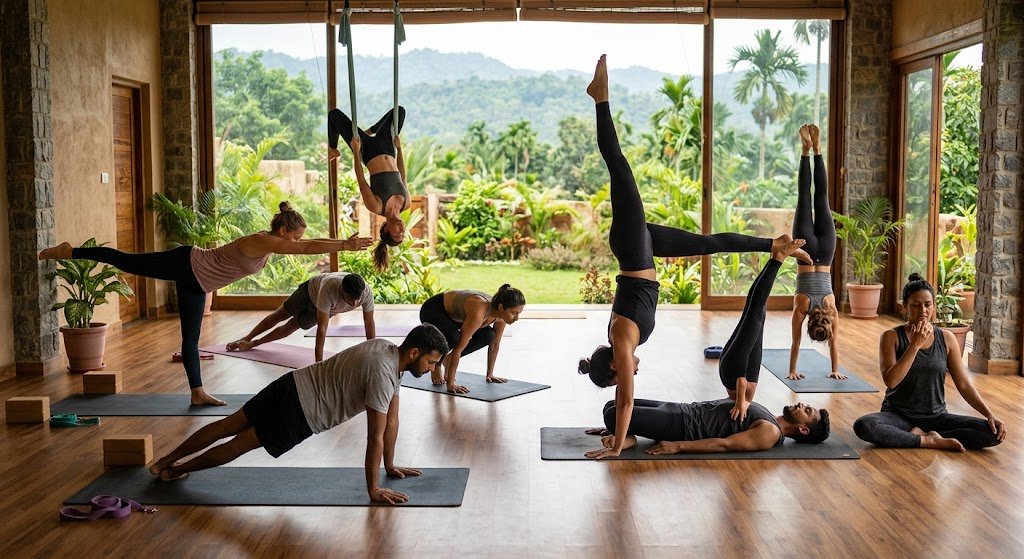
Yoga is evolving. While its roots remain deeply connected to India’s ancient traditions, today’s practitioners are increasingly interested in developing a complete set of physical and mental skills rather than simply learning difficult poses.
Modern yoga practice can bring together strength, flexibility, mobility, balance, breath regulation, concentration, meditation and mindful movement.
For people searching for the best yoga centre in Guwahati, this broader approach matters. A good yoga programme should help practitioners understand their bodies, breathing and movement while progressing according to their individual abilities.
At Durlav Yoga Centre Guwahati, students can explore traditional yogic foundations alongside contemporary approaches to fitness, mobility, strength and mindful practice. Established in 2015, Durlav Yoga Centre currently operates from Six Mile and Jalukbari and offers programmes for different ages and experience levels.
So, what are the most valuable yogic skills to develop today?
Here are 10 modern yogic skills to learn at Durlav Yoga Centre Guwahati.
1. Asana Alignment and Controlled Movement
The first modern yogic skill is not performing the most complicated pose.
It is learning how to perform even a simple posture with awareness, stability and control.
Asana alignment means understanding how different parts of the body work together while entering, maintaining and leaving a yoga posture.
For example, when practising a standing posture, students should gradually become aware of their feet, knees, hips, spine, shoulders and breathing rather than simply copying the final visual position of an instructor.
Good alignment training can help develop greater body awareness and make progression more structured.
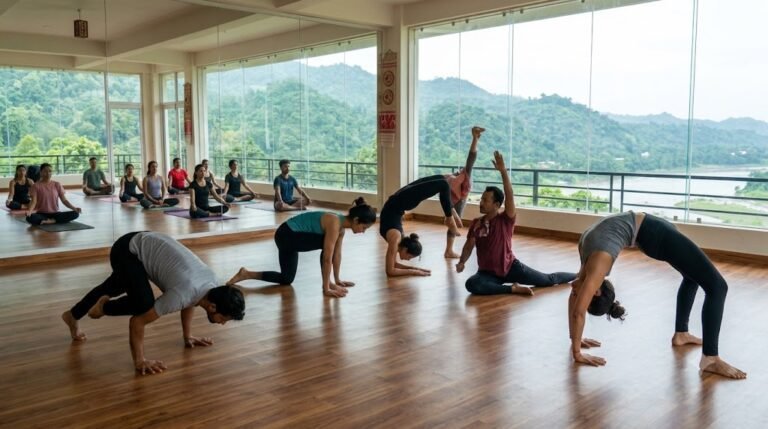
At Durlav Yoga Centre, general yoga classes include dynamic asanas combined with breathing exercises, strength and flexibility sequences, relaxation and meditation.
Modern yoga training therefore focuses less on “how impressive does the pose look?” and more on:
Can you enter it with control? Can you breathe comfortably? Can you maintain awareness? Can you exit safely?
That is a much more valuable skill.
2. Functional Flexibility and Mobility
Flexibility remains one of the biggest reasons people join yoga classes in Guwahati.
However, modern yoga increasingly distinguishes between simply being flexible and being able to move well.
Flexibility generally relates to the ability of muscles and tissues to lengthen, whereas mobility involves moving joints through a useful range of motion with appropriate control.
This distinction is important for people who spend long periods sitting at computers, driving, studying or using smartphones.
A well-rounded practice may therefore include controlled movement for the shoulders, spine, hips, knees and ankles rather than concentrating only on deep stretches.
The Ministry of AYUSH Common Yoga Protocol uses preparatory movements followed by structured asanas, pranayama and meditation, illustrating how mobility and preparation form part of a wider yogic practice.
WHO’s 2026 work on yoga and healthy ageing similarly highlights mobility and flexibility as important physical abilities that yoga may support.
At Durlav Yoga Centre Guwahati, developing mobility gradually can provide a stronger foundation for progressing into more challenging asanas.
3. Yogic Strength and Core Control
Yoga is not only about stretching.
Many yoga postures demand considerable muscular control.
Standing postures can challenge the legs. Planks and arm-supported positions engage the upper body. Balancing poses require stabilising muscles, while transitions between poses can place significant demands on the core.
This means strength and body control are important modern yogic skills.
WHO’s 2026 International Day of Yoga material highlights strength alongside balance, flexibility and mobility as part of yoga’s contribution to physical function.
Modern yoga students can therefore focus on developing controlled strength rather than simply trying to become more flexible.
At Durlav Yoga Centre, published class information includes strength and flexibility-building sequences as part of general yoga training.
For someone searching for yoga for strength and flexibility in Guwahati, developing these two abilities together can create a more balanced practice.
4. Balance and Body Stability
Balance is another fundamental yogic skill.
Think about a posture such as Vrikshasana or Tree Pose.
Standing on one leg may look straightforward, but maintaining the position requires coordination between vision, concentration, leg strength, core stability and body awareness.
This is why balance training can become a powerful combination of physical and mental practice.
NCCIH reports that research has found promising evidence for yoga and balance, including studies in healthy people and older adults.
Balance should also be progressive.
A beginner may start with simple supported variations before gradually working towards more challenging positions.
The objective is not to compete with the person practising next to you.
The objective is to understand your own centre of gravity, develop stability and learn how attention influences movement.
5. Pranayama and Breath Regulation
One of the most important differences between yoga and conventional exercise is its emphasis on breathing.
Pranayama refers to yogic breathing practices involving conscious regulation and awareness of the breath.
India’s Ministry of AYUSH Common Yoga Protocol includes pranayama alongside asanas and meditation, reinforcing breathing as a fundamental part of yogic practice rather than an optional addition.
Recent research continues to investigate controlled breathing.
A 2026 systematic review and meta-analysis examining pranayama among medical students reported reductions in self-reported stress and anxiety, although the authors also noted substantial variation among studies and the need for additional high-quality randomized trials.
Another systematic review found promising results for breathing interventions for stress and anxiety in adults while noting limitations in the available evidence.
The practical lesson is simple: learning to breathe deliberately and appropriately is one of the most valuable skills yoga students can develop.
It may include learning how breathing relates to movement, relaxation, concentration and meditation.
Forceful or advanced breathing practices should be learned appropriately, especially for people with relevant health conditions.
6. Mindful Movement and Concentration
Modern life constantly competes for our attention.
Phones, notifications, social media, work, studies and daily responsibilities can make sustained concentration difficult.
Yoga provides an environment where attention can be deliberately directed towards the present activity.
During a yoga session, a practitioner may focus on:
the position of the body,
the quality of movement,
the rhythm of breathing,
the feeling of balance,
and awareness of the present moment.
This combination can transform yoga from a sequence of exercises into mindful movement.
NCCIH describes modern yoga as typically combining physical postures, breathing techniques and meditation. Research reviewed by NCCIH suggests potential benefits for general wellness, stress management and mental and emotional well-being.
A 2023 systematic review also found that many studies examining a single yoga, meditation or breathing session reported reduced acute stress reactivity, although the evidence varied between studies.
At Durlav Yoga Centre Guwahati, concentration can therefore become a skill developed alongside strength and flexibility.
7. Meditation and Mental Stillness
A complete yoga practice does not necessarily end when the physical postures finish.
Meditation is another major component.
Meditation can involve directing attention towards breathing, bodily sensations, an object of concentration or present-moment awareness.
The Ministry of AYUSH Common Yoga Protocol places meditation after physical practices and pranayama, showing how these elements can form part of a connected practice.
The objective does not have to be completely eliminating thoughts.
For beginners, meditation can simply involve learning to sit comfortably, observe breathing and repeatedly return attention when the mind becomes distracted.
Over time, students may develop better awareness of how quickly attention moves from one thought to another.
Durlav Yoga Centre’s general class structure also includes guided relaxation and meditation.
This makes meditation an important modern yogic skill for people who want their yoga practice to involve more than physical fitness.
8. Postural Awareness and Body Awareness
Modern lifestyles often involve repeated positions.
People may spend hours looking at laptops, smartphones or desks without paying much attention to how they are sitting or moving.
Yoga encourages practitioners to become more aware of physical position.
Instead of promising that yoga will magically create “perfect posture,” a more realistic goal is developing postural awareness.
During practice, students learn to notice where their weight is distributed, how the spine is positioned, whether the shoulders are tense and how movement changes when different muscles are engaged.
This awareness can then extend beyond the yoga mat.
Durlav Yoga Centre’s current training content specifically includes posture awareness, alignment and body control within its approach to modern yoga training.
Learning to observe the body is itself an important yogic skill.
9. Dynamic Yoga, Coordination and Flow
Not everyone wants the same style of yoga.
Some practitioners enjoy slower, traditional practices, while others prefer more dynamic sessions.
Modern yoga therefore includes the skill of moving between postures with greater coordination and control.
Durlav Yoga Centre’s currently published programmes mention approaches associated with Hatha Yoga, Ashtanga Yoga, Power Yoga and Aerial Yoga, alongside general yoga, youth yoga and artistic and rhythmic yoga.
Different approaches can challenge practitioners in different ways.
Dynamic sequences may require greater cardiovascular effort, muscular endurance and coordination.
Slower practices may allow more time to work on alignment, breathing and awareness.
The important skill is not simply moving quickly.
It is learning to coordinate:
movement + breathing + balance + control + concentration.
As this coordination develops, yoga sequences can begin to feel more connected rather than like a collection of unrelated poses.
10. Safe Progression Towards Advanced Yogic Skills
Perhaps the most important modern yogic skill is knowing when not to progress.
Social media frequently showcases headstands, deep backbends, arm balances and highly flexible poses.
These can create the impression that advanced yoga is about achieving visually impressive positions as quickly as possible.
It is not.
Advanced practice should be built on suitable strength, mobility, balance, technique and experience.
NCCIH states that yoga is generally considered safe for healthy people when practised appropriately under qualified guidance, but injuries can occur. It specifically advises beginners to avoid extreme practices such as headstands and shoulder stands without appropriate preparation.
This principle has become even more relevant as yoga grows globally.
In December 2025, the World Health Organization published its Training in Yoga: Technical Report, describing competency-based knowledge and skills for yoga teaching and training and highlighting quality and safety in instruction.
Learning how to progress gradually is therefore not a limitation.
It is an advanced skill in itself.
Traditional Yoga Meets Modern Yogic Training
The phrase “modern yoga” should not mean abandoning traditional yoga.
Instead, modern yogic training can preserve essential elements such as asana, pranayama, concentration, meditation and discipline while applying them to today’s lifestyles and physical needs.
Someone working at a computer may need mobility.
A teenager may be interested in strength, balance and confidence.
A beginner may need basic alignment.
An experienced practitioner may want advanced asanas.
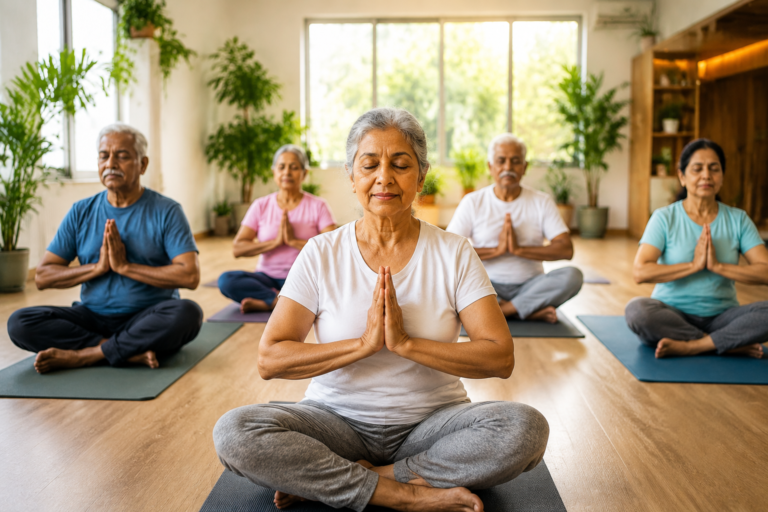
An older adult may need adapted movement.
WHO’s 2026 theme of Yoga for Healthy Ageing reinforces this idea of adaptability. WHO emphasizes that yoga can be modified according to age and ability while integrating movement, breathing and mindfulness.
The best modern yoga practice is therefore not the hardest practice.
It is the practice that is appropriate for the individual.
Why Learn Modern Yogic Skills at Durlav Yoga Centre Guwahati?
Durlav Yoga Centre has been serving practitioners in Guwahati since 2015 and currently operates centres at Six Mile and Jalukbari.
Its published programmes combine traditional yogic elements with contemporary training focused on strength, flexibility, mobility, balance, posture, breathing and mindfulness. It also provides programmes for different groups and practice preferences.
This makes Durlav Yoga Centre relevant for people searching for terms such as:
best yoga centre in Guwahati,
yoga classes in Guwahati,
yoga for beginners Guwahati,
pranayama classes in Guwahati,
modern yoga training Guwahati,
yoga for flexibility and strength,
and professional yoga training in Guwahati.
More importantly, students can approach yoga as an ongoing learning process rather than a short-term challenge.
Which Yogic Skill Should a Beginner Learn First?
Beginners do not need to begin with advanced poses.
A better progression is to first understand comfortable movement, breathing, basic alignment and body awareness.
Strength, flexibility and balance can then develop gradually.
Pranayama, relaxation and meditation can complement the physical practice.
As confidence increases, practitioners can explore more demanding sequences or styles according to their interests and abilities.
This progression reflects one of the most important principles of professional yoga training:
Build the foundation before chasing the advanced pose.
Are Modern Yogic Skills Suitable for Young People?
Yoga can be adapted for different age groups.
Durlav Yoga Centre currently publishes dedicated programmes for youth and children in addition to general classes.
NCCIH reports that research into yoga for children and adolescents has shown promising findings in areas including balance, strength, focus and self-regulation, while also emphasizing that younger practitioners should begin slowly and use age-appropriate practices.
This makes proper guidance particularly important for young practitioners interested in advanced or artistic yoga.
Is Yoga Only About Flexibility?
No.
Flexibility is only one part of modern yoga.
A balanced practice may develop:
flexibility + mobility + strength + balance + breathing + concentration + meditation + body awareness + coordination + discipline.
That combination explains why yoga continues to remain relevant even as fitness trends change.
Start Learning Modern Yogic Skills in Guwahati
Yoga has existed for thousands of years, but its ability to adapt is one reason it remains relevant today.
Modern practitioners can preserve traditional yogic foundations while developing practical abilities suited to contemporary lifestyles.
The top 10 modern yogic skills explored in this guide—alignment, mobility, strength, balance, pranayama, mindfulness, meditation, postural awareness, coordination and safe progression—work together to create a more complete practice.
If you are searching for the best yoga centre in Guwahati to learn modern yogic skills, Durlav Yoga Centre provides guided training through its Six Mile and Jalukbari centres.
Whether you are a complete beginner or an experienced practitioner, remember that progress in yoga is not defined by how difficult your pose looks.
It is defined by how much control, awareness, consistency, breathing, balance and discipline you bring to your practice.
Learn gradually. Move consciously. Breathe with awareness. Build your yogic skills one practice at a time at Durlav Yoga Centre Guwahati.
Backlinks:-
- WHO – Yoga for Healthy Ageing
https://www.who.int/news-room/commentaries/detail/yoga-for-healthy-ageing-global-practice-and-clinical-evidence - WHO – Training in Yoga: Technical Report
https://www.who.int/publications/i/item/9789240119567 - Ministry of AYUSH – Common Yoga Protocol 2026
https://yoga.ayush.gov.in/uploads/assets/cyp/CYP_Book_English_2026.pdf - NCCIH – Yoga: Effectiveness and Safety
https://www.nccih.nih.gov/health/yoga-effectiveness-and-safety - NCCIH – Yoga for Health
https://www.nccih.nih.gov/health/providers/digest/yoga-for-health - PubMed – Effects of Yoga on Stress
https://pubmed.ncbi.nlm.nih.gov/39553891/ - PubMed – Pranayama and Stress Reduction Research
https://pubmed.ncbi.nlm.nih.gov/42326246/ - World Health Organization – International Day of Yoga 2026
https://www.who.int/news/item/22-06-2026-who-celebrates-the-power-of-yoga-for-healthy-ageing